



AI-Driven Hiring: Matching Niche Skills to the Right Roles Faster


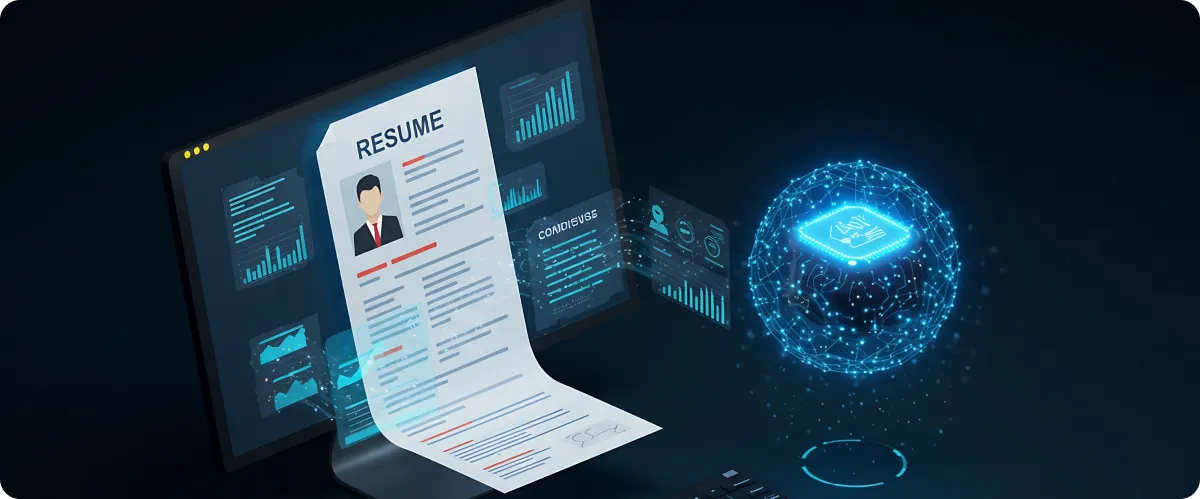
AI-Driven Hiring: Matching Niche Skills to the Right Roles Faster
AI-powered recruitment platforms are transforming how organizations identify and secure specialized tech talent. As digital transformation accelerates, roles are no longer defined by simple job titles, they are defined by complex, layered skill combinations. Traditional hiring models, built around resumes and keyword filters, are struggling to keep pace with this shift.
Speed alone is no longer a competitive advantage. Precision is. The ability to accurately match niche skills to the right opportunity is what drives long-term performance, retention, and business impact.
The Real Hiring Challenge
Today’s hiring challenge isn’t access to candidates, it’s identifying genuine capability in an increasingly specialized landscape.
Modern roles often require expertise across multiple domains: cloud platforms, automation tools, data ecosystems, security frameworks, and emerging technologies. Resumes rarely tell the full story. Keyword-based screening tools frequently miss contextual depth, transferable skills, and real-world application experience.
As a result, organizations risk overlooking high-potential candidates while advancing profiles that merely “check boxes.”
AI shifts hiring from surface-level screening to true skill intelligence. Instead of focusing solely on past titles, it evaluates patterns, how candidates solve problems, what environments they thrive in, and how their capabilities align with the complexity of the role.
From Screening to Skill Intelligence
By analyzing skills, project history, career trajectories, and performance indicators, AI-driven platforms surface candidates who genuinely fit the role, not just on paper, but in practice.
These systems assess relationships between competencies, recognize non-linear career growth, and detect signals that human reviewers might miss under time pressure. For example, a candidate transitioning from infrastructure engineering to DevOps may demonstrate the precise hybrid skill set required for modern cloud-native environments even if their title history doesn’t explicitly state it.
This deeper pattern recognition enables companies to uncover strong matches that manual review would often overlook, especially when candidates come from unconventional backgrounds or adjacent industries.
The result is smarter shortlists, stronger interviews, and better alignment between role expectations and actual capability.
Why Precision Matters for Specialized Roles
For highly specialized roles such as:
- AI Engineers
- Cloud Security Experts
- DevOps Leaders
precision is not optional — it is mission-critical.
In these roles, small skill gaps can have outsized consequences. A cloud architect without deep security expertise, or a data engineer without scalable pipeline experience, can introduce operational risks that surface months later.
AI-driven hiring models help organizations:
- Identify nuanced technical overlaps
- Recognize transferable skills across platforms
- Reduce unconscious bias in evaluation
- Significantly shorten time-to-hire
Most importantly, they improve hiring quality without sacrificing speed. This balance is essential in competitive talent markets where delays mean lost innovation and missed revenue opportunities.
Better Outcomes for Both Employers and Candidates
AI-driven matching does not only benefit employers, it strengthens outcomes for candidates as well.
When professionals are matched to roles that reflect their true strengths and growth trajectories:
- Engagement increases
- Ramp-up time decreases
- Performance stabilizes faster
- Retention improves
Teams benefit from stronger collaboration because hires are not just technically qualified, they are strategically aligned.
Instead of forcing candidates into rigid role definitions, AI enables a more dynamic understanding of capability. This creates opportunities for high-performing individuals who might otherwise be overlooked due to non-traditional paths.
The result is a healthier talent ecosystem built on fit, not just credentials.
From Hiring Tool to Strategic Advantage
Over time, AI recruitment platforms evolve beyond operational hiring tools. They become strategic workforce intelligence systems.
Organizations gain visibility into:
- Emerging skill shortages
- Talent pipeline weaknesses
- Future capability gaps
- Workforce planning opportunities
Rather than reacting to hiring needs, companies can proactively design talent strategies aligned with business growth.
Importantly, the most effective organizations use AI to enhance, not replace human judgment. Technology surfaces insight. Leadership makes decisions.
When combined thoughtfully, AI-driven hiring creates a sustainable competitive advantage: faster access to specialized talent, stronger team composition, and long-term workforce resilience.
In a market defined by rapid technological evolution, the companies that master precision in hiring will outperform those that rely solely on speed.
AI-driven matching does not only benefit employers, it strengthens outcomes for candidates as well.
When professionals are matched to roles that reflect their true strengths and growth trajectories:

Connecting People,
Powering Progress.
CYMA SYSTEMS, INC. 360 Tolland Turnpike,
Suite 2D Manchester, CT 06042, USA

